Use of Simulation in the Classroom – Video

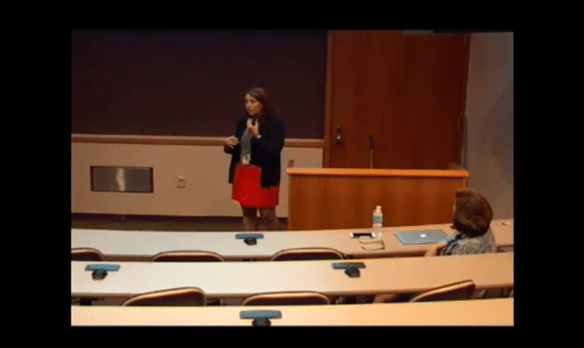
Click the video below to watch Dr. Chasity Shelton, College of Pharmacy provide an overview of the UTHSC Sim Center and discuss best practices in simulation education.

The below presentation was held Friday, July 8, 2016 as part of the Teaching & Learning Center’s ongoing series of monthly sessions to provide faculty with knowledge of all aspects of educational simulation implementation.

Screen Shot 2016-07-14 at 8.34.04 AM

Watch the Blackboard Conference Live and FREE

Thursday, July 14, 2016, The BbWorld Conference will offer their sessions online for free. There will be eight different sessions broadcast live over the course of the day themed around Digital Learning in Higher Education.

Sessions of note include:

Rocket session: great teaching in a world of connected students. 10:30AM CDT – This block will supercharge the TED talk format offering 7-minute sessions that pack a punch on topics including “Engaging Your Students Via Text Message,” “Integrating Video into Your Courses,” and “Social Presence in Online Learning.” Continue reading

Flipped Classroom Blogs & Articles

Below are some great resources about flipped classrooms and how to integrate this into your current teaching practices. If you have found any additional resources you would like to share, please, let us know!

Avoid These Five Rookie Mistakes When Flipping Your Class

How to Encourage Your Students to Actually DO the Pre-Class Work

Three Ways to Hold Students Accountable for Pre-Class Work

You Don’t Have to be a Technology Guru to FLIP Your Classroom: An ‘Unplugged’ Flipped Strategy

For additional articles visit the Flip it Blog.

TurningPoint Cloud Upgrade

To all Current and Potential Users of TurningPoint Technologies (clicker technology). 

Action is required. 

During the week of June 27th to July 1st, UTHSC podia was updated to TurningPoint Cloud. Information Technology Systems (ITS) also replaced receivers and updated the podium computers with Windows 10 and Microsoft Office 2016.

Faculty and Students must be ready to use TurningPoint Cloud prior to the first day of class.  The Teaching & Learning Center (TLC) will provide training, tutorials, an up-to-date website, ongoing communication and support in the use of TurningPoint Cloud.

Continue reading

Wrapping up the Year of Active Learning at UTHSC

Back in January, we announced that 2014 would mark the year of active learning at UTHSC. Throughout the year, we have shared resources and hosted sessions focusing on active learning strategies and resources. Links are included below that will allow you to revisit the active learning resources shared and look back on some of the sessions that took place during 2014.

Did you implement any new active learning strategies into your courses during 2014? Share your experiences with us via the comments section below.

RESOURCES – 2014: YEAR OF ACTIVE LEARNING AT UTHSC

UTHSC Faculty Resource Center Blog

Look back at our blog posts throughout 2014 related to Active Learning:
https://uthsctlc.wordpress.com/category/active-learning/

2014 – The Year of Active Learning at UTHSC Resource Page

Review the list of active learning resources shared throughout 2014:
https://academic.uthsc.edu/faculty/2014.php

Resources from UTHSC Faculty Development Seminar: Active Learning and the Flipped Classroom

The UTHSC College of Medicine and the Office of Academic, Faculty and Student Affairs hosted a two-day seminar (June 25th – 26th, 2014) led by Deirdre Bonnycastle from the University of Saskatchewan College of Medicine.

Review the numerous resources shared during this two-day seminar:
http://tinyurl.com/uthsc-activelearning

Session recordings – Professional Development Course in Blackboard

Login to the Professional Development course in Blackboard and revisit some of the session recordings and archives from 2014 including:

•    Magna 20 Minute Mentor – Where Can I Find Flippable Moments in My Classes?
•    Magna Online Seminar – Can you Flip an Online Class? Yes, You Can!

Directions for enrolling in the Professional Development course in Blackboard can be found at:
http://tinyurl.com/profdevenroll
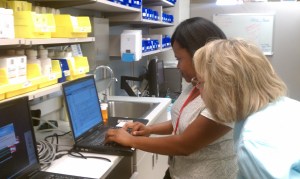
Active Learning


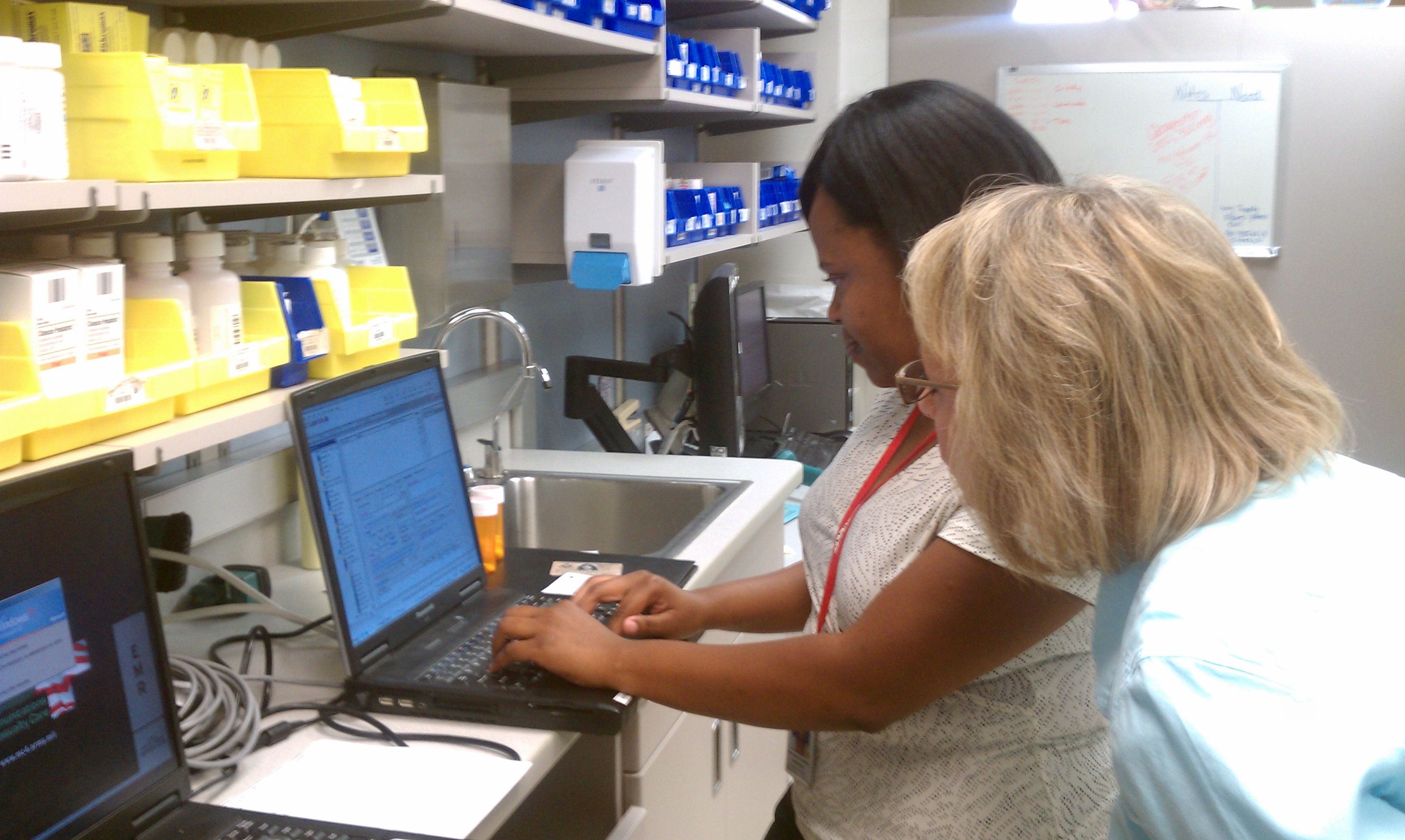
Image obtained from: http://en.wikipedia.org/wiki/Telepharmacy
Faculty Development Seminar: Active Learning and the Flipped Classroom

Resources Available – Faculty Development Seminar: Active Learning and the Flipped Classroom

Dates:  Took place June 25 – 26, 2014 at UTHSC

Session Overview:

The UTHSC College of Medicine and the Office of Academic, Faculty and Student Affairs hosted a two-day seminar led by Deirdre Bonnycastle from the University of Saskatchewan College of Medicine. Ms. Bonnycastle has been involved in adult education and program development for 42 years. In her former position as a faculty member in the Extension Division, University of Saskatchewan, she researched the effects of disabilities on participation in university programs and worked extensively in the development of online credit courses. For the last 10 years, she has been responsible for faculty development at both the UGME and PGME level at the University of Saskatchewan College of Medicine and regularly delivers faculty development seminars on topics focusing on teaching in preclinical and clinical settings, incorporating active learning, and strategies for flipping the classroom.

Sessions that took place during this two-day seminar were interactive, required group discussion/work, and focused on:

  • Learning objectives (Creating student-centered learning objectives and creating assignments that align with learning objectives)
  • Creating an effective flipped learning environment (Using out of class time for teaching and how to use class time in a flipped classroom)

Session Resources:

Presentation Slides – Slideshare

http://www.slideshare.net/DeirdreB/

Medical Education Blog

Prereadings for June 25th and June 26th sessions – http://words.usask.ca/medicaleducation/2014/04/18/flipped-workshop/

Medical Education Wiki

http://medicaleducation.wikifoundry.com/page/Resources

Medical Education Canada – Collection of resources curated by Deirdre Bonnycastle

http://www.scoop.it/t/medical-education-canada

Clinical Teaching Guidebook – iBook available on iTunes

https://itunes.apple.com/ca/book/clinical-teaching-guidebook/id681319811?mt=11

Diigo – Link to Resources on Objectives

https://www.diigo.com/user/deirdreb/objectives

Handout – A Glossary of Verbs

Click A GLOSSARY OF VERBS-1 to download the Glossary of Verbs Handout

Gamification: Can it be a valuable teaching and learning tool?

The 2014 NMC Horizon Report listed gamification as one of the important educational technology developments to closely watch in the next two to three years within higher education. You might be thinking, what in the world is gamification and what does it have to do with education? Great question!

Different definitions of gamification exist, but earlier this year, Gartner  provided a simple definition as, “the concept of applying game mechanics and game design techniques to engage and motivate people to achieve their goals.” Gamification in education can take many forms including students participating in virtual simulations to adding simple game elements to a class to enhance teaching and learning.

Daniel McGarry, Educational Coordinator in the UTHSC College of Nursing, recently wrote a blog post sharing an example of how Brenda Hill, an instructor in the BSN/MSN department, incorporated gaming into her classroom through the use of an interactive tool called Kahoot. Check out Daniel’s blog post and watch the two short videos he included. You can see and hear in both video clips that the students are very much engaged in this activity!

You can read Daniel’s entire post at: http://dmgtech.co/2014/11/07/kahoot-a-simple-case-study-in-gamification/

Utilizing gaming strategies in higher education appears to be growing in popularity. Research is also beginning to show that gaming strategies help to foster engagement, critical thinking, problem-solving, and teamwork. What are your thoughts? Could incorporating gaming elements or strategies into your classes help to enhance teaching and learning?


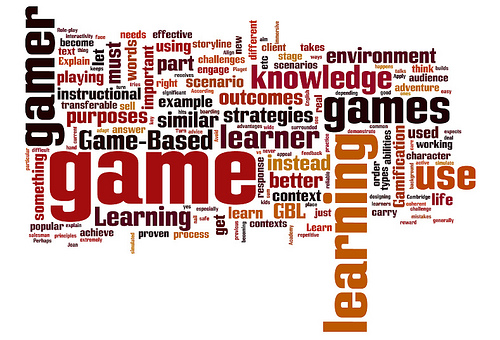
game


Image obtained from: https://farm9.static.flickr.com/8347/8271121416_028d01ec37.jpg

Online Learning – Special Issue on Blended Learning in the Health Sciences

This special edition of Online Learning, the official journal of the Online Learning Consortium, reveals how blended learning is being developed at The George Washington University School of Medicine and Health Sciences (GW SMHS) in disciplines heavily reliant upon traditional, face-to-face models of teaching and learning.

Educators at this institution share knowledge of their efforts to respond to challenges to education in the health professions by encouraging adoption of technology-enhanced and blended models of delivery that support pedadgoical goals such as active learning, collaboration, reflective practice, and higher-order thinking. The series of articles in this issue consider the need for better integration of technology in the education of healthcare professionals and presents the sustained and coordinated efforts of one institution to promote integration of online technology into face-to-face courses.

To view this issue of Online Learning (available as a free PDF file download) please go to: http://onlinelearningconsortium.org/jaln_full_issue/volume-18-issue-4-november-2014/


Screen Shot 2014-12-01 at 10.58.06 AM


Providing Effective Feedback

In last week’s blog post (Assessing Your Assessment Strategy), we discussed rubrics and how they can be utilized as part of your assessment strategy. Rubrics are certainly an important and valuable assessment tool. However, assessment can be delivered in other formats as well.

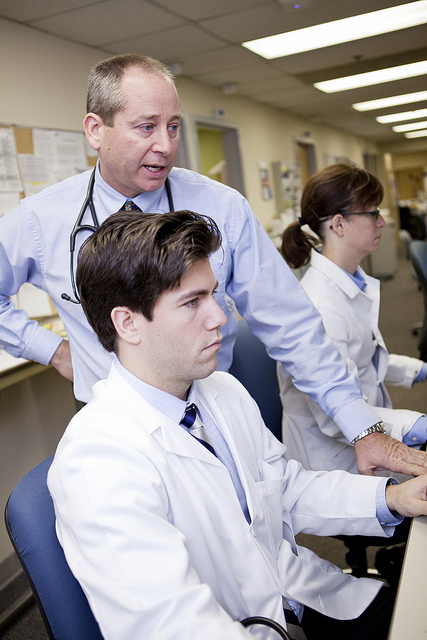
Providing verbal feedback can also play an important role in your overall assessment strategy.  Feedback can be delivered via a two-way conversation between the learner and instructor particularly in clinical settings. For feedback to be beneficial to the learner, it must be specific and focused on the behavior or performance observed. These conversations, if properly facilitated, can be very effective methods for assessing performance particularly in an active learning environment such as a clinical setting. Several resources are available to assist instructors in improving their skills related to providing feedback such as:

How do you provide feedback to your students? What tips or suggestions can you share?

Residents_2


Imaged obtained from: https://c1.staticflickr.com/9/8008/6996700130_c299d9d626_z.jpg