
Week of June 23, 2014 – Professional Development Opportunities

Primarily Education-Focused Sessions and Resources

Limited Space Available – Faculty Development Seminar: Active Learning and the Flipped Classroom

Dates: June 25 – 26, 2014

Location: 920 Madison – Room 653 (COM TBL Room)

Session Overview:

The UTHSC College of Medicine and the Office of Academic, Faculty and Student Affairs will be hosting a two-day seminar led by Deirdre Bonnycastle from the University of Saskatchewan College of Medicine. Ms. Bonnycastle has been involved in adult education and program development for 42 years. In her former position as a faculty member in the Extension Division, University of Saskatchewan, she researched the effects of disabilities on participation in university programs and worked extensively in the development of online credit courses. For the last 10 years, she has been responsible for faculty development at both the UGME and PGME level at the University of Saskatchewan College of Medicine and regularly delivers faculty development seminars on topics focusing on teaching in preclinical and clinical settings, incorporating active learning, and strategies for flipping the classroom.

Ms. Bonnycastle summarizes the best practical information from the international literature in her popular blogs: Medical Education Blog (Teaching in Medicine) and Medical Education Canada

Sessions taking place during this two-day seminar will be interactive, will require group discussion/work, and will focus on:

  • Learning objectives (Creating student-centered learning objectives and creating assignments that align with learning objectives)
  • Creating an effective flipped learning environment (Using out of class time for teaching and how to use class time in a flipped classroom)

In order to have a better understanding of what it means to be a student in a flipped environment, select prereading materials have been made available by Ms. Bonnycastle at http://words.usask.ca/medicaleducation/2014/04/18/flipped-workshop/

Schedule:

Day 1 (June 25, 2014; 9:00 AM – 4:00 PM)

  • 9:00 AM – 11:30 AM (Writing student-centered learning objectives to guide teaching and assessment)
  • 1:00 PM – 4:00 PM (Using out of class time for teaching)

Day 2 (June 26, 2014; 9:00 AM – 12:00 PM)

  • 9:00 AM – 12:00 PM (How to use class time in a flipped classroom)

We have a limited number of seats left for this two-day faculty development seminar. If you have NOT submitted your registration to attend, please contact Kristy Conger (kconger@uthsc.edu) with questions regarding available space.

Creating Rubrics: Improve Assessments, Assignments and Outcomes (Webinar)

Date: July 9, 2014
Time: 12:00 PM – 1:00 PM
LocationGEB A304

Presenter: Dr. Teresa Flateby (Director of Academic Assessment at Georgia Southern University)

Session Overview:

Well-designed rubrics are an invaluable tool to help students understand what they need to learn and help educators effectively assess learning outcomes and course quality. How can you ensure that your rubric satisfies instructional and assessment purposes for both you and your students? Join us for a highly-informative, 60-minute webinar where you will discover:

  • Steps to develop quality scoring rubrics – templates included!
  • Different types of rubrics and what bests fits your assessment needs
  • Effective ways to outline assignment expectations to students
  • Ways to limit grade appeals and confusion through well written rubrics
  • Critical characteristics and specific examples of effective rubrics

To register for this session go to: http://tinyurl.com/creatingrubrics

Interprofessional Collaborative Practice: Are you training students to practice in expert teams or teams of experts? (Webinar)

Date: July 17, 2014
Time: 12:00 PM – 1:00 PM
Location: GEB A204

Presenter: Jennifer Danielson, PharmD, MBA, CDE (Director, Experiential Education, University of Washington)

This webinar is hosted by Texas Tech University Health Sciences Center – School of Pharmacy

Session Objectives:

  • Discriminate between interdisciplinary and interprofessional practice.
  • Distinguish activities and responsibilities that students from multiple professions can do in a practice site to encourage teamwork and shared decision making.
  • Organize a plan or schedule that facilitates interprofessional interaction across professions within your practice site.
  • Relate potential assessment tools for interprofessional collaborative practice to currently used experiential education evaluation and assessment methods.

Best Practices for Designing and Assessing Online Discussion Questions (Sloan-C Webinar)

Date: July 30, 2014
Time: 1:00 PM – 2:00 PM
Location: Register and participate from any location

Presenters: Dr. Andrea McCourt, Dr. Jillian Yarbrough, and Dr. Marcus Tanner – Texas Tech University

Session Overview:

Online discussion can provide students with the opportunity to express ideas, think about course content, apply course concepts to real-world situations, interact with classmates and faculty, and reflect on attitudes or values. However, it can be challenging to create discussion questions that engage students in critical thinking and encourage robust interaction. It is additionally challenging to assess different aspects of online discussion and provide students with meaningful qualitative and quantitative feedback. This webinar will provide strategies and tips for meeting these challenges.

To learn more about this webinar or register go to: http://sloanconsortium.org/institute/webinars/2014/7/bestpracticesfordesandassessonlinediscuss?{{$par}}

Professional Sessions

Save the Date! – New Faculty Orientation

Date: September 26, 2014 (Friday)
Time: 8:00 AM – 11:00 AM
Location: SAC – OD Larry Dining Hall

Session Overview:

The Office of Academic, Faculty, and Student Affairs (AFSA) will be hosting the New Faculty Orientation as a supplement to the orientation that is given by Human Resources at each faculty member’s hire date. The AFSA New Faculty Orientation is catered specifically to the faculty with introductions of people and resources that may be of help in their growth and advancement during their time of employment with UTHSC.

This session is for all new faculty hired since January 2014 who DID NOT attend New Faculty Orientation in March 2014.

A light breakfast will be served beginning at 7:30 AM.

Please use the following link to RSVP your attendance for New Faculty Orientation: http://tinyurl.com/uthsc-nfo-fall2014

Questions regarding New Faculty Orientation? Please contact Kristy Conger (kconger@uthsc.edu / 901-448-2253).

Additional Resources

2014: The Year of Active Learning at UTHSC
To access a variety of active learning resources visit https://academic.uthsc.edu/faculty/2014.php

UTHSC’s Faculty Resource Center
View schedule of professional development opportunities and read out latest blog post at https://uthsctlc.wordpress.com/

Making a Good Virtual First Impression

Are you currently designing or redesigning an online course? If so, you’ve probably created a checklist of items to help guide you through the process of building the course. You may have already checked items off the list such as:

  • Course syllabus and course schedule created
  • Discussion forums setup
  • Content uploaded to course site

Seems like you’re well on your way to having your online course built. However, there is one very important component that you may not have yet thought about. How will you introduce yourself to your online students? During the first meeting of a face-to-face course, do you typically spend a few minutes greeting your students and introducing yourself? Many of us dedicate a little bit of time during our first class meeting of the semester to introductions and making that all important first impression. But, is this possible in an online course? Absolutely! Most laptop and desktop computers are equipped with webcams that make recording an introductory video for your online course simple and quick. 

Research statistics recently shared in an article in Campus Technology showed that introductions within an online course help students form stronger connections to their instructors. Many online students state that feeling connected to their instructor positively impacted their overall performance in the course and also led to higher overall ratings for the course.

So, fire up that webcam on your computer and start recording! You’re students can’t wait to meet you.

Have questions related to online teaching and learning? Contact Kristy Conger (kconger@uthsc.edu / 901-448-2253).

webcam


Image provided via Creative Commons copyright license and obtained from http://en.wikipedia.org/wiki/LifeCam#mediaviewer/File:Lifecam_vx-3000.jpg

Week of June 16, 2014 – Professional Development Opportunities

Primarily Education-Focused Sessions and Resources

Faculty Development Seminar: Active Learning and the Flipped Classroom

Dates: June 25 – 26, 2014

Location: College of Medicine TBL Room (920 Madison – Room 653)

Session Overview:

The UTHSC College of Medicine and the Office of Academic, Faculty and Student Affairs will be hosting a two-day seminar led by Deirdre Bonnycastle from the University of Saskatchewan College of Medicine. Ms. Bonnycastle has been involved in adult education and program development for 42 years. In her former position as a faculty member in the Extension Division, University of Saskatchewan, she researched the effects of disabilities on participation in university programs and worked extensively in the development of online credit courses. For the last 10 years, she has been responsible for faculty development at both the UGME and PGME level at the University of Saskatchewan College of Medicine and regularly delivers faculty development seminars on topics focusing on teaching in preclinical and clinical settings, incorporating active learning, and strategies for flipping the classroom.

Ms. Bonnycastle summarizes the best practical information from the international literature in her popular blogs: Medical Education Blog (Teaching in Medicine) and Medical Education Canada

Sessions taking place during this two-day seminar will be interactive, will require group discussion/work, and will focus on:

  • Learning objectives (Creating student-centered learning objectives and creating assignments that align with learning objectives)
  • Creating an effective flipped learning environment (Using out of class time for teaching and how to use class time in a flipped classroom)

Use the following links to register to attend:

Day 1 (June 25, 2014; 9:00 AM – 4:00 PM) – http://tinyurl.com/facultydevday1

Day 2 (June 26, 2014; 9:00 AM – 12:00 PM) – http://tinyurl.com/facultydevday2

In order to have a better understanding of what it means to be a student in a flipped environment, select prereading materials have been made available by Ms. Bonnycastle at http://words.usask.ca/medicaleducation/2014/04/18/flipped-workshop/

Opening the Box: Building Online Learning Communities with Multiuser Blogging Environments

Date: June 18, 2014
Time: 1:00 PM – 2:00 PM
Location: Join us in GEB A304 for a group viewing of this webinar

Presenter: Michael Wilder (University of Nevada)

Session Overview:

Although blogging is not new to education, current improvements to blogging systems have enabled this technology to be applied in innovative and creative ways. Instead of simply being mechanisms for individual reflection or announcement, newer features allow open-source blogging systems to become full-fledged virtual communities that enable sophisticated social interaction, collaboration, and peer evaluation.

A combination of the open-source blogging software, WordPress, with the free BuddyPress plugin, creates an environment in which students can create academic publications with a full-range of contemporary word-processing features (including the addition of images, video, and podcasts), share resources, work collaboratively, and comment and evaluate each other’s work.

At the same time, this system allows students to have direct control of their learning environment (through customized themes), to participate in Facebook-like social interactions (“friending,” “liking,” commenting, user profiles), to integrate social media (such as Twitter, Facebook, Pinterest, YouTube, Flickr), and to collaborate (via document sharing, group support, and wikis). In addition this educational practice allows mobile access (via smartphones and tablets) as well as badges and gamification.

Participants in this webinar will be able to:

  • Describe some of the major affordances of multiuser blogging environments
  • Evaluate application of this technology in education,
  • List basic technological requirements and enhancements,
  • Identify other institutions currently using this innovation.

To register for this webinar go to: http://tinyurl.com/uthsccalendar

Sloan-C Webinar: Best Practices for Designing and Assessing Online Discussion Questions

Date: July 30, 2014
Time: 1:00 PM – 2:00 PM
Location: Register and participate from any location

Presenters: Dr. Andrea McCourt, Dr. Jillian Yarbrough, and Dr. Marcus Tanner – Texas Tech University

Session Overview:

Online discussion can provide students with the opportunity to express ideas, think about course content, apply course concepts to real-world situations, interact with classmates and faculty, and reflect on attitudes or values. However, it can be challenging to create discussion questions that engage students in critical thinking and encourage robust interaction. It is additionally challenging to assess different aspects of online discussion and provide students with meaningful qualitative and quantitative feedback. This webinar will provide strategies and tips for meeting these challenges.

To learn more about this webinar or register go to: http://sloanconsortium.org/institute/webinars/2014/7/bestpracticesfordesandassessonlinediscuss?{{$par}}

Professional Sessions

Save the Date! – New Faculty Orientation

Date: September 26, 2014 (Friday)
Time: 8:00 AM – 11:00 AM
Location: SAC – OD Larry Dining Hall

Session Overview:

This session is for all new faculty hired since January 2014 who DID NOT attend New Faculty Orientation in March 2014.

A light breakfast will be served beginning at 7:30 AM.

To register to attend go to: http://tinyurl.com/uthsc-nfo-fall2014

Questions regarding New Faculty Orientation? Please contact Kristy Conger (kconger@uthsc.edu / 901-448-2253).

Additional Resources

2014: The Year of Active Learning at UTHSC
To access a variety of active learning resources visit https://academic.uthsc.edu/faculty/2014.php

UTHSC’s Faculty Resource Center
View schedule of professional development opportunities and read out latest blog post at https://uthsctlc.wordpress.com/
Week of June 9, 2014 – Professional Development Opportunities

Primarily Education-Focused Sessions and Resources

Opening the Box: Building Online Learning Communities with Multiuser Blogging Environments

Date: June 18, 2014
Time: 1:00 PM – 2:00 PM
Location: GEB A304

Presenter: Michael Wilder (University of Nevada)

Session Overview:

Although blogging is not new to education, current improvements to blogging systems have enabled this technology to be applied in innovative and creative ways. Instead of simply being mechanisms for individual reflection or announcement, newer features allow open-source blogging systems to become full-fledged virtual communities that enable sophisticated social interaction, collaboration, and peer evaluation.

A combination of the open-source blogging software, WordPress, with the free BuddyPress plugin, creates an environment in which students can create academic publications with a full-range of contemporary word-processing features (including the addition of images, video, and podcasts), share resources, work collaboratively, and comment and evaluate each other’s work.

At the same time, this system allows students to have direct control of their learning environment (through customized themes), to participate in Facebook-like social interactions (“friending,” “liking,” commenting, user profiles), to integrate social media (such as Twitter, Facebook, Pinterest, YouTube, Flickr), and to collaborate (via document sharing, group support, and wikis). In addition this educational practice allows mobile access (via smartphones and tablets) as well as badges and gamification.

Participants in this webinar will be able to:

  • Describe some of the major affordances of multiuser blogging environments
  • Evaluate application of this technology in education,
  • List basic technological requirements and enhancements,
  • Identify other institutions currently using this innovation.

To register for this webinar go to: http://tinyurl.com/uthsccalendar

Faculty Development Seminar: Active Learning and the Flipped Classroom

Dates: June 25 – 26, 2014

Location: College of Medicine TBL Room

Session Overview:

The UTHSC College of Medicine and the Office of Academic, Faculty and Student Affairs will be hosting a two-day seminar led by Deirdre Bonnycastle from the University of Saskatchewan College of Medicine. Ms. Bonnycastle has been involved in adult education and program development for 42 years. In her former position as a faculty member in the Extension Division, University of Saskatchewan, she researched the effects of disabilities on participation in university programs and worked extensively in the development of online credit courses. For the last 10 years, she has been responsible for faculty development at both the UGME and PGME level at the University of Saskatchewan College of Medicine and regularly delivers faculty development seminars on topics focusing on teaching in preclinical and clinical settings, incorporating active learning, and strategies for flipping the classroom.

Ms. Bonnycastle summarizes the best practical information from the international literature in her popular blogs: Medical Education Blog (Teaching in Medicine) and Medical Education Canada

Sessions taking place during this two-day seminar will be interactive, will require group discussion/work, and will focus on:

  • Learning objectives (Creating student-centered learning objectives and creating assignments that align with learning objectives)
  • Creating an effective flipped learning environment (Using out of class time for teaching and how to use class time in a flipped classroom)

Use the following links to register to attend:

Day 1 (June 25, 2014; Tentatively scheduled for 9:00 AM – 4:00 PM) – http://tinyurl.com/facultydevday1

Day 2 (June 26, 2014; Tentatively scheduled for 9:00 AM – 12:00 PM) – http://tinyurl.com/facultydevday2

In order to have a better understanding of what it means to be a student in a flipped environment, select prereading materials have been made available by Ms. Bonnycastle at http://words.usask.ca/medicaleducation/2014/04/18/flipped-workshop/

Sloan-C Webinar: Best Practices for Designing and Assessing Online Discussion Questions

Date: July 30, 2014
Time: 1:00 PM – 2:00 PM
Location: The online webinar format allows you to participate from any location

Presenters: Dr. Andrea McCourt, Dr. Jillian Yarbrough, and Dr. Marcus Tanner – Texas Tech University

Session Overview:

Online discussion can provide students with the opportunity to express ideas, think about course content, apply course concepts to real-world situations, interact with classmates and faculty, and reflect on attitudes or values. However, it can be challenging to create discussion questions that engage students in critical thinking and encourage robust interaction. It is additionally challenging to assess different aspects of online discussion and provide students with meaningful qualitative and quantitative feedback. This webinar will provide strategies and tips for meeting these challenges.

To learn more about this webinar or register go to: http://sloanconsortium.org/institute/webinars/2014/7/bestpracticesfordesandassessonlinediscuss?{{$par}}

New Issue – Journal of Asynchronous Learning Networks

Overview:

The Sloan Consortium and the Editorial Board of JALN are pleased to announce the publication of a new issue of the Journal of Asynchronous Learning Networks. In this issue a collection of articles provides much needed insight into the state of online faculty development; comparative dynamics of classroom and online performance; support for student interaction in online environments, and emerging legal issues crucial to online educators and their institutions.

Table of Contents:

A National Study of Training Content and Activities for Faculty Development for Online Teaching
Katrina A. Meyer, University of Memphis
Vicki Murrell, University of Memphis

A Study of Personal Information Management Strategies for Online Faculty
Lorna R. Kearns, University of Pittsburgh
Barbara A. Frey, University of Pittsburgh
Christinger Tomer, University of Pittsburgh
Susan Alman, San Jose State University

An Analysis of the Cost and Cost-Effectiveness of Faculty Development for Online Teaching
Katrina A. Meyer, University of Memphis

A Confirmatory Factor Analysis of Teaching Presence within Online Professional Development
Melinda G. Miller, United States Air Force Academy
Debbie L. Hahs-Vaughn, University of Central Florida
Vicky Zygouris-Coe, University of Central Florida

Thematic Analysis of the “Games” Students Play in Asynchronous Learning Environments
Thalia MacMillan, Empire State College
Michele Forte, SUNY Empire State College
Cynthia Grant, Concordia University Chicago

Investigating Asynchronous Online Communication: A Connected Stance Revealed
Susan J Wegmann, Baptist College of Florida
Joyce K. McCauley, Sam Houston State University

Applying a Model of Communicative Influence in Education in Closed Online and Offline Courses
Caleb T. Carr, Illinois State University

How Much “Group” is there in Online Group Work?
Susan Lowes, Ph.D., Institute for Learning Technologies

Comparing Student Performance in Online and Face-to-face Delivery Modalities
Jeffrey L. Helms, Kennesaw State University

Round One? Judge Issues Rulings in Long-awaited Copyright Infringement Lawsuit Against Georgia State University*
Linda K. Enghagen, University of Massachusetts at Amherst

Professional Sessions

Toastmaster’s Brain Builders UTHSC Chapter

Date: Every Tuesday
Time: 12:00 PM – 1:00 PM
Location: The Urban Child Institute, 600 Jefferson Avenue, 1st Floor Conference Room, Conference Room 4

A Toastmaster’s meeting is a learn-by-doing workshop in which participants hone their speaking and leadership skills in a no-pressure atmosphere. Everyone is welcome!

For more information about Toastmaster’s contact Detlef Heck (dheck@uthsc.edu).

Additional Resources

2014: The Year of Active Learning at UTHSC
To access a variety of active learning resources visit https://academic.uthsc.edu/faculty/2014.php

UTHSC’s Faculty Resource Center
View schedule of professional development opportunities and read out latest blog post at https://uthsctlc.wordpress.com/
VoiceThread: Using More Than Text in Online Discussions

We’ve spent some time in previous posts talking about online discussion forums and their use as an active learning tool. In this week’s post, we’re going to focus on a specific tool that you can use to add an additional level of interactivity to your online discussions.

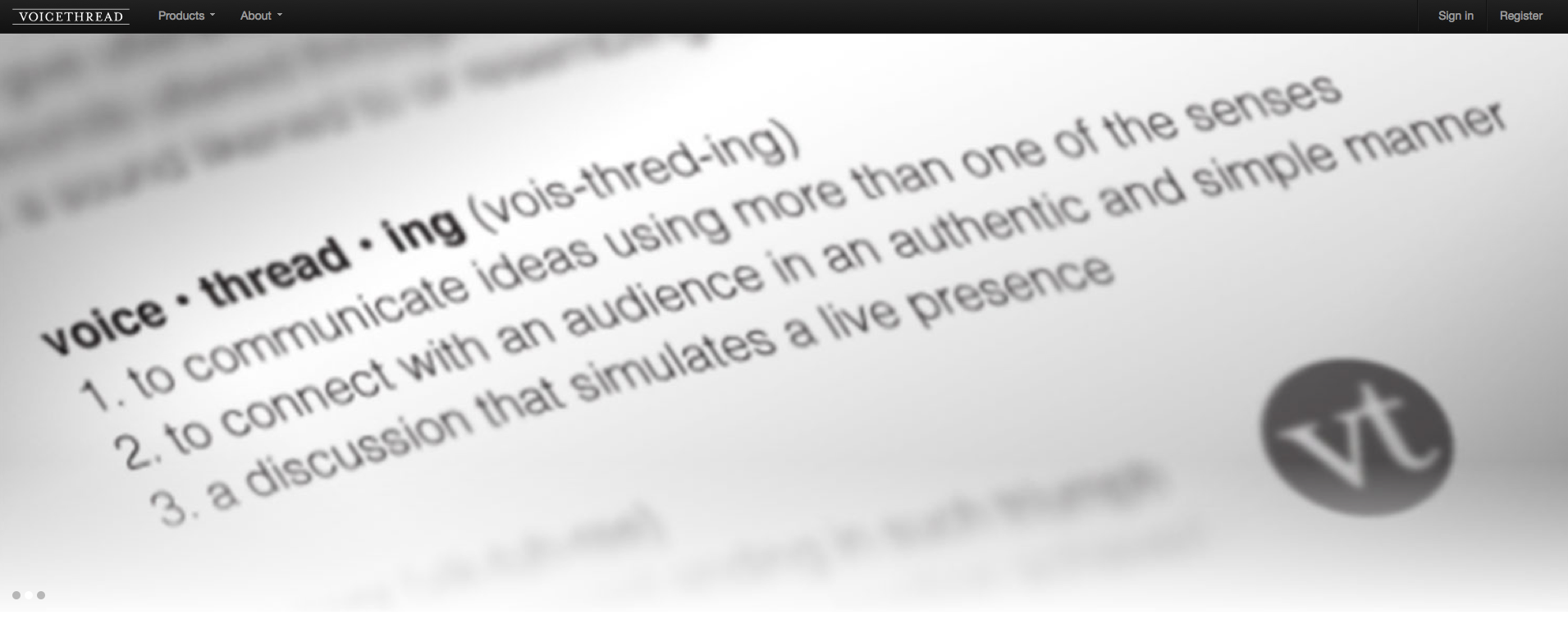
VoiceThread is a cloud-based application that is accessible via computer or mobile device. VoiceThread allows users to participate in an online class discussion via multiple options such as submitting comments or replies by microphone, webcam, text, phone, or audio-file upload. 

Several educators, including Michelle Pacansky-Brock,  are finding VoiceThread to be a valuable resource to utilize in facilitating online discussions. Michelle has received a Sloan-C Excellence in Online Teaching Award and was honored with a Sloan-C Effective Practice Award for her use of VoiceThread to enhance online community and increase social presence. To learn more about how she has used VoiceThread in her classes visit the VoiceThread blog at http://blog.voicethread.com/webinars-all/.

Screen Shot 2014-06-06 at 2.20.54 PM

Chatter in the Classroom

As educators, we often find ourselves searching for effective methods to help engage our students while teaching or leading class discussions. However, we often find that we hear from the same students when posing a question to the class or attempting to engage students in discussing a topic. What about the shy or less vocal students? How can we include the students who are hesitant to speak up, ask a question, or participate in class discussions?

Some instructors are incorporating the use of a backchannel during lecture or class discussions in order to give every student the opportunity to have a voice. What is a backchannel? EDUCAUSE (in their ELI publication – 7 Things You Should Know About Backchannel Communication) defines a backchannel as a a secondary conversation that takes place at the same time as a conference session, lecture, or instructor-led learning activity. Most educators agree that secondary conversations taking place during lecture or other class activities are typically frowned upon and can be a distraction to others. However, technology is providing new ways for backchannel or secondary communications to take place. 

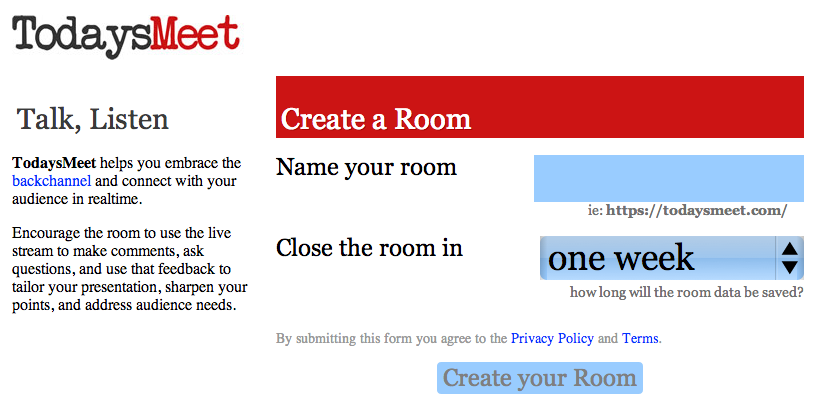
Tools, such as Today’s Meet, make it possible for instructors to create virtual chat or backchannel areas that students can use during class to ask questions or contribute their thoughts on the topic being presented. Instructors can assign specific students to monitor the chat area. At designated times during the class meeting, the student monitors can pass along questions or thoughts to the instructor that have been posted to the chat/backchannel area. This gives all students a chance to participate in the class discussion. It also provides a documented log of questions and thoughts shared during class that instructors can review afterwards and provide necessary responses or feedback for to students. The documented conversation also allows instructors to pinpoint specific topics presented during class that students might have struggled with in comprehending.

What are your thoughts on implementing backchannel communications as part of your classroom? Have you tried this strategy? Share your thoughts in the comments section below.


Screen Shot 2014-05-27 at 11.05.28 AM

Week of June 2, 2014 – Professional Development Opportunities

Primarily Education-Focused Sessions and Resources

Going Hybrid: The Latest Strategies in Developing Blended Courses

Date: June 3, 2014
Time: 12:00 PM – 1:00 PM
Location: GEB A304

Presenter: Jill Schiefelbein (Arizona State University)

Session Overview:

Transitioning your class from a traditional, in-person class to a hybrid course is no easy task but more and more educators are making the move to blended learning. What must you consider when designing and implementing a hybrid course? How can you develop successfully blended classes that combine the right elements of in-person and online content? Join Jill Schiefelbein for a live, interactive, 60-minute webinar where you will discover:

• Hybridizing your class – strategies for design & implementation
• What should you move to online & what should you keep face-to-face
• Pedagogical design strategies that fosters student interaction
• Critical tools & resources for successful class design
• Assessment in blended classes: How to measure learning outcomes

To register for this session go to http://tinyurl.com/uthsccalendar

Opening the Box: Building Online Learning Communities with Multiuser Blogging Environments

Date: June 18, 2014
Time: 1:00 PM – 2:00 PM
Location: GEB A304

Presenter: Michael Wilder (University of Nevada)

Session Overview:

Although blogging is not new to education, current improvements to blogging systems have enabled this technology to be applied in innovative and creative ways. Instead of simply being mechanisms for individual reflection or announcement, newer features allow open-source blogging systems to become full-fledged virtual communities that enable sophisticated social interaction, collaboration, and peer evaluation.

A combination of the open-source blogging software, WordPress, with the free BuddyPress plugin, creates an environment in which students can create academic publications with a full-range of contemporary word-processing features (including the addition of images, video, and podcasts), share resources, work collaboratively, and comment and evaluate each other’s work.

At the same time, this system allows students to have direct control of their learning environment (through customized themes), to participate in Facebook-like social interactions (“friending,” “liking,” commenting, user profiles), to integrate social media (such as Twitter, Facebook, Pinterest, YouTube, Flickr), and to collaborate (via document sharing, group support, and wikis). In addition this educational practice allows mobile access (via smartphones and tablets) as well as badges and gamification.

Participants in this webinar will be able to:

  • Describe some of the major affordances of multiuser blogging environments
  • Evaluate application of this technology in education,
  • List basic technological requirements and enhancements,
  • Identify other institutions currently using this innovation.

To register for this webinar go to: http://tinyurl.com/uthsccalendar

Save The Dates – Faculty Development Seminar: Active Learning and the Flipped Classroom

Dates: June 25 – 26, 2014

Location: College of Medicine TBL Room

Session Overview:

The UTHSC College of Medicine and the Office of Academic, Faculty and Student Affairs will be hosting a two-day seminar led by Deirdre Bonnycastle from the University of Saskatchewan College of Medicine. Ms. Bonnycastle has been involved in adult education and program development for 42 years. In her former position as a faculty member in the Extension Division, University of Saskatchewan, she researched the effects of disabilities on participation in university programs and worked extensively in the development of online credit courses. For the last 10 years, she has been responsible for faculty development at both the UGME and PGME level at the University of Saskatchewan College of Medicine and regularly delivers faculty development seminars on topics focusing on teaching in preclinical and clinical settings, incorporating active learning, and strategies for flipping the classroom.

Ms. Bonnycastle summarizes the best practical information from the international literature in her popular blogs: Medical Education Blog (Teaching in Medicine) and Medical Education Canada

Sessions taking place during this two-day seminar will be interactive, will require group discussion/work, and will focus on:

  • Learning objectives (Creating student-centered learning objectives and creating assignments that align with learning objectives)
  • Creating an effective flipped learning environment (Using out of class time for teaching and how to use class time in a flipped classroom)

Use the following links to register to attend:

Day 1 (June 25, 2014; Tentatively scheduled for 9:00 AM – 4:00 PM) – http://tinyurl.com/facultydevday1

Day 2 (June 26, 2014; Tentatively scheduled for 9:00 AM – 12:00 PM) – http://tinyurl.com/facultydevday2

Professional Sessions

Toastmaster’s Brain Builders UTHSC Chapter

Date: Every Tuesday
Time: 12:00 PM – 1:00 PM
Location: The Urban Child Institute, 600 Jefferson Avenue, 1st Floor Conference Room, Conference Room 4

A Toastmaster’s meeting is a learn-by-doing workshop in which participants hone their speaking and leadership skills in a no-pressure atmosphere. Everyone is welcome!

For more information about Toastmaster’s contact Detlef Heck (dheck@uthsc.edu).

Conferences

International Association of Medical Science Educators – IAMSE (Annual Conference)

Conference Dates: June 7-10, 2014
Location: Nashville, TN

Conference Overview:

The IAMSE meeting offers opportunities for faculty development and networking bringing together medical sciences and medical education across the continuum of health care education. Plenary topics for the 2014 meeting will include the use of simulation in medical education, giving effective and meaningful feedback, interprofessional education and the promotion of active learning in the classroom.

For additional details or to register for the conference please visit: http://www.iamseconference.org/

Additional Resources

2014: The Year of Active Learning at UTHSC
To access a variety of active learning resources visit https://academic.uthsc.edu/faculty/2014.php

UTHSC’s Faculty Resource Center
View schedule of professional development opportunities and read out latest blog post at https://uthsctlc.wordpress.com/

Digital Badges: A New Way to Promote Active Learning

In several of our blog posts this year, we have talked about ways to encourage active learning in face-to-face, hybrid, and online courses. We have shared several strategies to use within the classroom environment. But what about a strategy that will stretch beyond the classroom and help students build their digital resume or portfolio? Digital badges can help!

Digital badges continue to capture the interest of educators as another strategy to promote active learning and student engagement. What are badges? EDUCAUSE (in their ELI publication – 7 Things You Should Know About Badges) described badges as visual representations of an achievement or skill that appear as a logo or icon on a webpage or other online venue. Badges can reflect a number of milestones or accomplishments including specific competencies attained, projects completed, or awards won. 

Many believe that badges have the potential to be an effective active learning strategy that can motivate students as well as provide detailed evidence related to their specific accomplishments. What are your thoughts on using digital badges as an active learning strategy? Have you implemented or considered implementing badges as part of the courses you teach?

To learn more about digital badges and how they are being used in education check out the following resources:

A Future Full of Badges

http://chronicle.com/article/A-Future-Full-of-Badges/131455/

Using Badges in the Classroom to Motivate Learning

http://www.facultyfocus.com/articles/teaching-with-technology-articles/using-badges-classroom-motivate-learning/

Badging from Within

http://www.insidehighered.com/news/2014/01/03/uc-daviss-groundbreaking-digital-badge-system-new-sustainable-agriculture-program#sthash.dfIgeBOu.dpbs

How Badges Really Work in Higher Education

http://campustechnology.com/Articles/2013/06/20/How-Badges-Really-Work-in-Higher-Education.aspx?Page=3

badge


Image obtained from https://credlyapp.s3.amazonaws.com/badges/70058c1694e46bdc5f0990818152acc6_15.png

Week of May 19, 2014 – Professional Development Opportunities

For a calendar view of events please go to: http://bit.ly/UTHSCal

Primarily Education-Focused Sessions and Resources

Save The Dates – Faculty Development Seminar Focusing on Active Learning and the Flipped Classroom

Dates: June 25 – 26, 2014

Session Times and Location: To Be Announced

Session Overview:

The UTHSC College of Medicine and the Office of Academic, Faculty and Student Affairs will be hosting a two-day seminar led by Deirdre Bonnycastle from the University of Saskatchewan College of Medicine. Ms. Bonnycastle has been involved in adult education and program development for 42 years. In her former position as a faculty member in the Extension Division, University of Saskatchewan, she researched the effects of disabilities on participation in university programs and worked extensively in the development of online credit courses. For the last 10 years, she has been responsible for faculty development at both the UGME and PGME level at the University of Saskatchewan College of Medicine and regularly delivers faculty development seminars on topics focusing on teaching in preclinical and clinical settings, incorporating active learning, and strategies for flipping the classroom.

Ms. Bonnycastle summarizes the best practical information from the international literature in her popular blogs: Medical Education Blog (Teaching in Medicine) and Medical Education Canada

Sessions taking place during this two-day seminar will be interactive, will require group discussion/work, and will focus on:

  • Learning objectives (Creating student-centered learning objectives and creating assignments that align with learning objectives)
  • Creating an effective flipped learning environment (Using out of class time for teaching and how to use class time in a flipped classroom)

Stayed tuned for information on how you can register to attend!

Going Hybrid: The Latest Strategies in Developing Blended Courses

Date: June 3, 2014
Time: 12:00 PM – 1:00 PM
Location: GEB A304

Presenter: Jill Schiefelbein (Arizona State University)

Session Overview:

Transitioning your class from a traditional, in-person class to a hybrid course is no easy task but more and more educators are making the move to blended learning. What must you consider when designing and implementing a hybrid course? How can you develop successfully blended classes that combine the right elements of in-person and online content? Join Jill Schiefelbein for a live, interactive, 60-minute webinar where you will discover:

• Hybridizing your class – strategies for design & implementation
• What should you move to online & what should you keep face-to-face
• Pedagogical design strategies that fosters student interaction
• Critical tools & resources for successful class design
• Assessment in blended classes: How to measure learning outcomes

To register for this session go to http://tinyurl.com/uthsccalendar

Opening the Box: Building Online Learning Communities with Multiuser Blogging Environments

Date: June 18, 2014
Time: 1:00 PM – 2:00 PM
Location: GEB A304

Presenter: Michael Wilder (University of Nevada)

Session Overview:

Although blogging is not new to education, current improvements to blogging systems have enabled this technology to be applied in innovative and creative ways. Instead of simply being mechanisms for individual reflection or announcement, newer features allow open-source blogging systems to become full-fledged virtual communities that enable sophisticated social interaction, collaboration, and peer evaluation.

A combination of the open-source blogging software, WordPress, with the free BuddyPress plugin, creates an environment in which students can create academic publications with a full-range of contemporary word-processing features (including the addition of images, video, and podcasts), share resources, work collaboratively, and comment and evaluate each other’s work.

At the same time, this system allows students to have direct control of their learning environment (through customized themes), to participate in Facebook-like social interactions (“friending,” “liking,” commenting, user profiles), to integrate social media (such as Twitter, Facebook, Pinterest, YouTube, Flickr), and to collaborate (via document sharing, group support, and wikis). In addition this educational practice allows mobile access (via smartphones and tablets) as well as badges and gamification.

Participants in this webinar will be able to:

  • Describe some of the major affordances of multiuser blogging environments
  • Evaluate application of this technology in education,
  • List basic technological requirements and enhancements,
  • Identify other institutions currently using this innovation.

To register for this webinar go to: http://tinyurl.com/uthsccalendar

Professional Sessions

Biomedical Informatics Group (BIG) Meeting

Date: May 30, 2014
TIme: 12:00 PM – 1:00 PM
Location: 910 Madison Room 502

Presenter: Dan Housman, Chief Technology Officer, ConvergeHEALTH by Deloitte

Session Overview:

The rapid increase in available data about patients, including claims, electronic health records (EHR), consumer and ‘omics, along with enterprise approaches to managing large cohorts, has opened big opportunities to scale research and identify new findings. New platforms, including open source and commercial tools, are providing research teams with new ways to handle the complexity of these data sets. This presentation will include case studies and review the functionalities of translational bioinformatics tools in open source systems (e.g. i2b2, tranSMART) and how they are leveraged with commercial biomedical informatics applications (e.g. Qlikview, packaged reporting views). The presentation will also cover emerging commercial approaches for tools and data sharing within life sciences organizations.

Please join us for this exciting presentation. Lunch served.

Questions? Contact Teresa Waters (twaters@uthsc.edu)

Toastmaster’s Brain Builders UTHSC Chapter

Date: Every Tuesday
Time: 12:00 PM – 1:00 PM
Location: The Urban Child Institute, 600 Jefferson Avenue, 1st Floor Conference Room, Conference Room 4

A Toastmaster’s meeting is a learn-by-doing workshop in which participants hone their speaking and leadership skills in a no-pressure atmosphere. Everyone is welcome!

For more information about Toastmaster’s contact Detlef Heck (dheck@uthsc.edu).

Conferences

International Association of Medical Science Educators – IAMSE (Annual Conference)

Conference Dates: June 7-10, 2014
Location: Nashville, TN

Conference Overview:

The IAMSE meeting offers opportunities for faculty development and networking bringing together medical sciences and medical education across the continuum of health care education. Plenary topics for the 2014 meeting will include the use of simulation in medical education, giving effective and meaningful feedback, interprofessional education and the promotion of active learning in the classroom.

For additional details or to register for the conference please visit: http://www.iamseconference.org/

Additional Resources

2014: The Year of Active Learning at UTHSC
To access a variety of active learning resources visit https://academic.uthsc.edu/faculty/2014.php

UTHSC’s Faculty Resource Center
View schedule of professional development opportunities and read out latest blog post at https://uthsctlc.wordpress.com/

Twitter 101: What is it, and what can I do with it?

Links and Resources for May 16, 2014 Twitter 101 Session

Twitter and PLN Resources:

Using Twitter in Health Science Education:

twitter-bird


Image obtained from: http://pixabay.com/es/twitter-tweet-ave-gracioso-lindo-117595/